Why CPR Looks Nothing Like It Does on TV
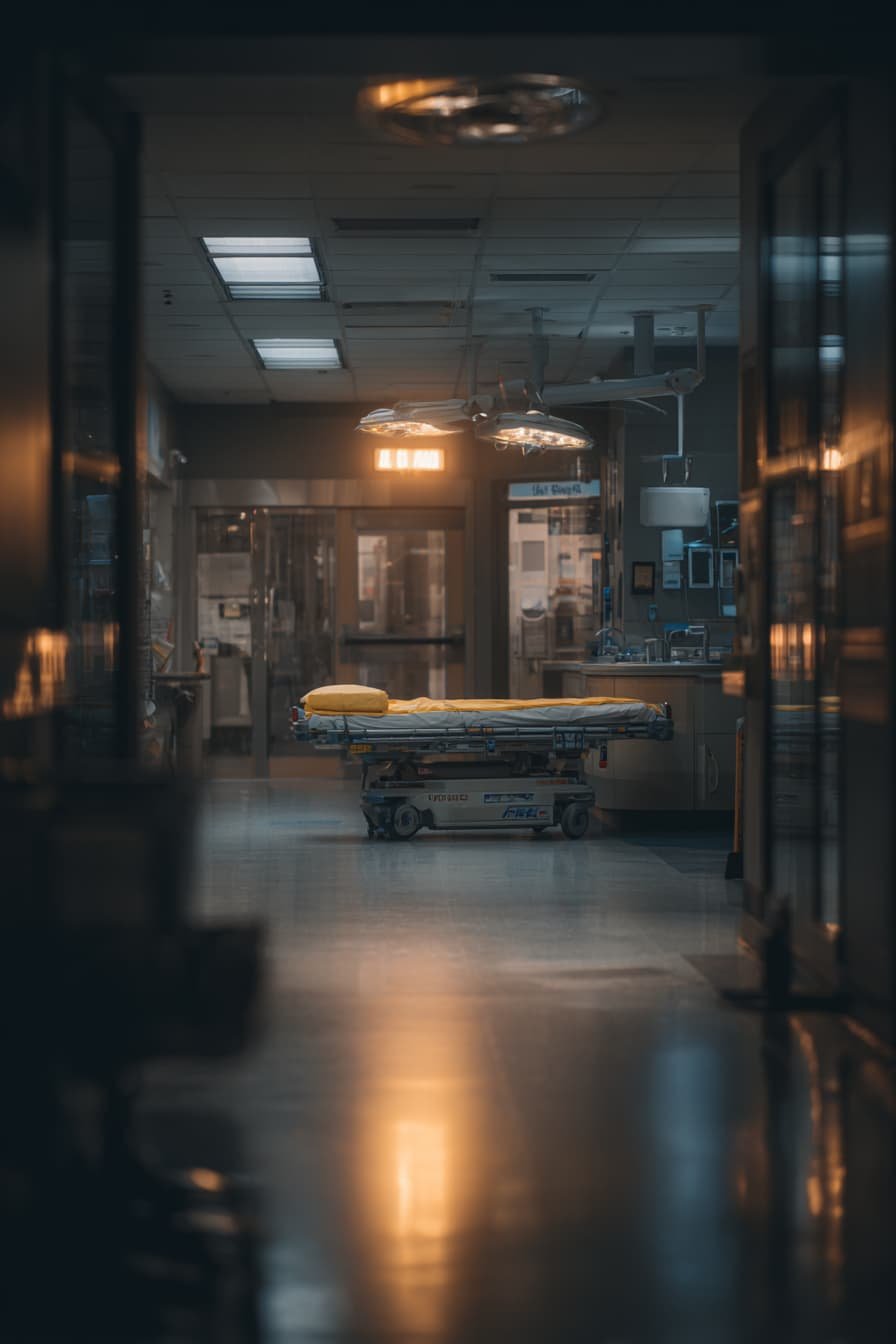
What the procedure is really like, why it looks nothing like television, and what families deserve to know before they have to decide.
A code is called overhead, the signal that a patient's heart or breathing has suddenly stopped, and the calm of the department breaks all at once.
Diane, 58, is pressed against the hallway wall while a room full of strangers works on her husband. She has seen this moment on television more times than she can count. Someone leans on a chest, the patient coughs, the monitor settles, and everyone breathes again.
What she is watching now bears almost no resemblance to that. It is faster, louder, and far more physical than any screen prepared her for.
Almost everything most people believe about CPR was learned from television, and almost all of it is wrong. CPR is one of the most powerful tools in medicine and one of the most misunderstood. Learning what it actually involves is not morbid curiosity. For many families, it is the only honest preparation for a decision they may one day be asked to make.
What CPR Is Actually Trying to Do
CPR is a holding action, not a repair.
When the heart stops, blood stops moving, and the brain begins to starve within minutes. Chest compressions exist to temporarily take over the heart's pumping job by hand. By pressing the heart between the breastbone and the spine, rescuers generate enough circulation to push some blood to the brain and vital organs.
During cardiac arrest, CPR becomes the patient's heartbeat.
What compressions do not do is fix whatever made the heart stop in the first place. This is the misunderstanding at the center of how people picture CPR. Pushing on the chest does not magically restart a heart and send someone back to normal. CPR buys time, and those minutes only matter if something else can use them to solve the real problem.
That is why emergency physicians place so much emphasis on early, uninterrupted, high-quality compressions. Before advanced medications. Before intensive care. Before many of the machines people associate with resuscitation. Without circulation, nothing else works well.
Why Real CPR Looks So Violent
Effective CPR is forceful by design, not by accident.
To move enough blood, compressions must push the chest about two inches deep, roughly one hundred to one hundred twenty times every minute, with as few pauses as possible. That requires real force. Even on thin patients, doing CPR correctly becomes exhausting within minutes. On larger patients, it can feel physically punishing. Arms burn. Shoulders fatigue. Compressors rotate constantly because people tire faster than they expect.
Ribs frequently crack or separate from the breastbone during effective CPR. The sound can be jarring for families hearing it for the first time, but it does not mean something has gone wrong. The body simply was not built for this kind of force. That force is often the difference between compressions that actually circulate blood and compressions that only look convincing from across the room. The roughness is not cruelty. It is physiology.
What the Machines and Medications Are Really Doing
The defibrillator does not work the way movies suggest.
Television often shows a flatline suddenly jolting back to life after a dramatic shock. Real defibrillators are useful only for certain dangerous heart rhythms, and what they actually do is briefly stop chaotic electrical activity so the heart's own natural pacemaker, the small cluster of cells that sets its rhythm, has a chance to reset. On a true flatline, shocking does nothing at all, which is why you will sometimes see a team keep doing compressions instead of reaching for the paddles.
At the same time, the team is searching for why the arrest happened in the first place. A massive heart attack. A blood clot. Severe blood loss. A dangerous electrolyte imbalance, when the minerals that keep the heart's signals firing fall out of balance. Medications may support blood pressure or stabilize rhythms, but the real goal is always the same, to reverse the underlying cause before the body runs out of time. Modern hospitals also use mechanical compression devices that deliver continuous chest compressions automatically. Families often find these machines startling at first, but they exist for a simple reason. Humans get tired. Machines do not.
The Odds Are Not What Television Promised
Survival is real, but it is the exception, not the expectation.
On television, patients often wake within moments and are back to normal conversation by the next scene. The real numbers are sobering. When cardiac arrest happens outside a hospital, only about one in ten people survive to leave the hospital, a figure that has barely changed in thirty years. The odds roughly double when a bystander starts CPR right away, and they climb further when the rhythm is one a defibrillator can treat. Even inside a hospital, with a team seconds away, only about one in five survive to discharge.
This gap is not a technicality. It quietly shapes the hardest decisions families ever face. A family that believes CPR almost always works will hear a doctor's honesty as surrender. A family that understands the real odds can think more clearly about what is worth doing and when. The point of stating the numbers plainly is not to remove hope. It is to replace fiction with honesty, so that hope rests on something real.
Why Knowing This Matters Before You Ever Need It
Restoring a heartbeat is not the same as restoring a person.
The brain tolerates the loss of blood flow poorly, and the minutes without circulation can leave lasting marks. Some survivors return fully to their lives. Others wake with changes to memory, movement, or thinking, and some never regain consciousness at all. The longer the brain went without oxygen, the harder that road tends to be. Television ends at the gasp. Real medicine often begins there, with intensive care and an anxious wait to see how much of the person comes back.
This is the quiet context behind hard conversations about code status, the decision made in advance about whether to attempt CPR, and do-not-resuscitate orders, which formally record a person's wish not to have it. For a young person whose heart stops suddenly, CPR is frequently lifesaving and almost always the right call. For someone at the end of a long and serious illness, the same procedure may add suffering without offering meaningful recovery.
There is no universal right answer, only the one that fits the particular person. That decision is far easier to reach calmly when CPR is already understood as the forceful, limited, sometimes miraculous bridge it truly is, rather than the guaranteed reset button a screen once promised.
THE BOTTOM LINE
• CPR temporarily takes over the heart's job by manually circulating blood to the brain and vital organs. It buys time, but it does not by itself fix whatever stopped the heart.
• Effective CPR is forceful by necessity. Broken ribs, exhausting compressions, and constant compressor rotation are all part of doing it well, and the defibrillator works very differently than movies suggest.
• Survival is far less common than television implies, and surviving is not the same as full recovery. Understanding this before a crisis is what makes an honest decision about resuscitation possible.
The clearest decision about resuscitation is the one made calmly, long before a code is ever called. The Emergency File gives you a place to record your wishes, your medications, and your history, so the people who love you are not left guessing in a hallway. Get The Emergency File. Free 13-page PDF. Fill it once. Keep it where someone can find it.

Ask the ER Doctor
-
Usually not, and that is the most common misunderstanding. Compressions take over the heart's pumping job to keep blood reaching the brain. They buy time so a defibrillator, medication, or treatment of the underlying cause can do the actual work of restarting the heart.
-
Less often than television suggests. When cardiac arrest happens outside a hospital, only about one in ten people survive to discharge, though immediate bystander CPR roughly doubles those odds. Inside a hospital, survival is around one in five. Speed and the type of heart rhythm matter enormously.
-
Because effective compressions require real force, pushing the chest about two inches deep, around a hundred times a minute. Cracked or separated ribs are common and expected, not a sign of a mistake. That force is what keeps blood moving to the brain.
By Dr. Karim Ali, Emergency Physician