What Is an MRI? How Magnetic Resonance Imaging Works
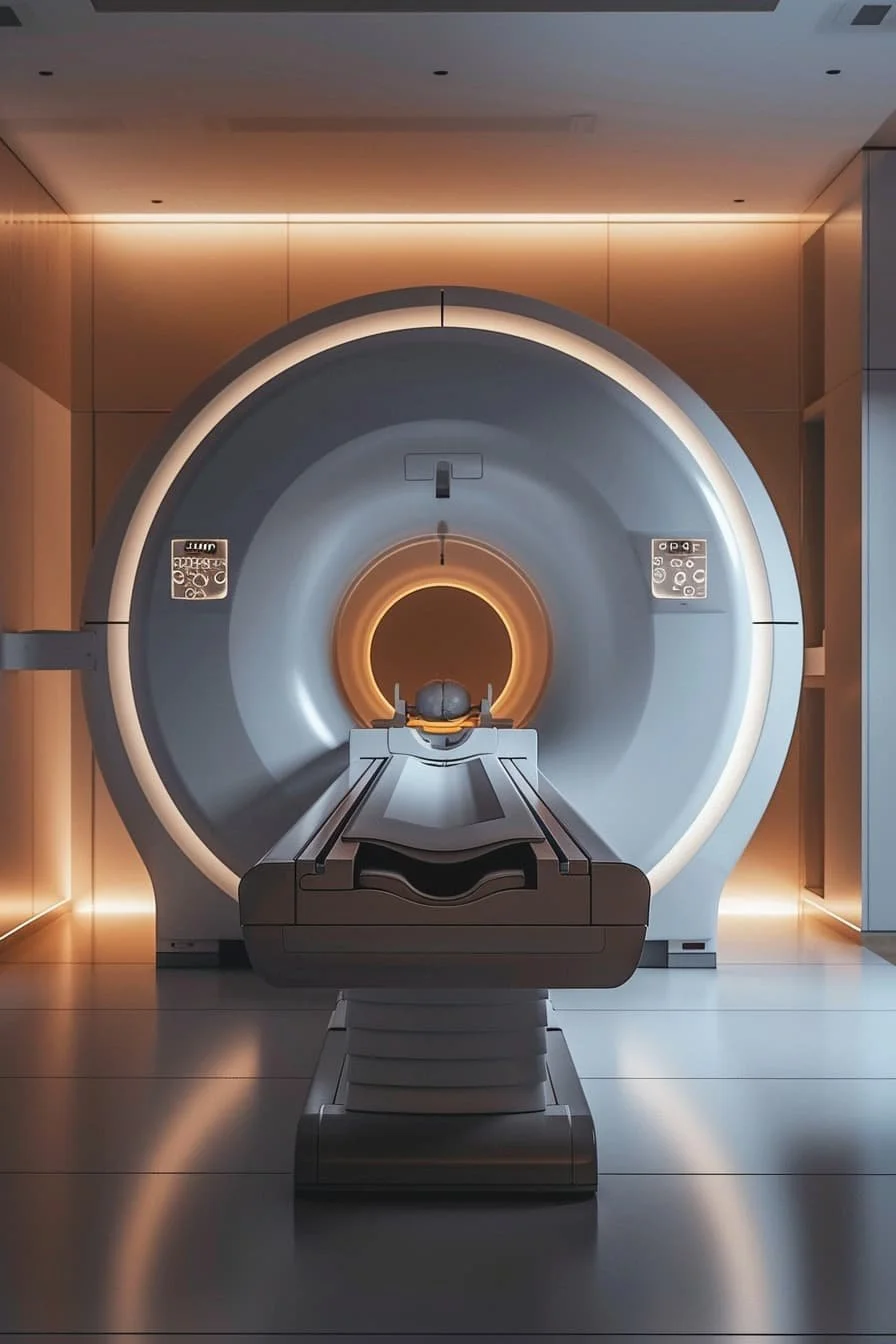
A clear explanation of MRI scans, when doctors choose MRI instead of CT, and what this powerful imaging test can reveal
When the CT Scan Is Not Enough
Maria was pregnant and came to the emergency department with severe abdominal pain.
The previous visit had ended with reassurance. Pregnancy can cause many types of abdominal discomfort, and nothing dangerous had been found at the time. But now she was back, and something felt different. The pain was worse.
Because she was pregnant, doctors wanted to avoid radiation from a CT scan if possible. Instead, they ordered an MRI. The scan revealed the real problem. She had a small bowel obstruction.
Sometimes the right imaging test makes all the difference.
What an MRI Actually Is
MRI stands for magnetic resonance imaging.
Unlike CT scans or X-rays, MRI does not use radiation. Instead, it uses powerful magnets and radio waves to create detailed pictures of the inside of the body.
The magnet temporarily changes the behavior of tiny particles in the body’s tissues. When those particles return to their normal state, they release signals that the MRI machine converts into images. This allows doctors to see extremely detailed views of organs, muscles, nerves, and other soft tissues.
Why MRI Is Often Better Than CT
MRI is particularly useful when doctors need detailed images of soft tissue.
Structures like the brain, spinal cord, muscles, ligaments, and internal organs are often much easier to evaluate with MRI than with CT. MRI can detect conditions like brain tumors, spinal cord compression, ligament injuries, and certain cancers with greater clarity.
It is also more sensitive for detecting early strokes. In the early hours of a stroke, CT scans may appear normal while MRI can often reveal subtle changes in brain tissue. For spinal conditions such as cauda equina syndrome, spinal abscess, or epidural bleeding, MRI is usually the best imaging test available.
Why MRI Is Often Safer for Some Patients
Because MRI does not use radiation, it is often preferred for certain groups of patients.
Pregnant patients may receive MRI scans when doctors need detailed imaging but want to avoid exposing the developing baby to radiation. Children may also benefit from MRI for the same reason.
However, MRI has one important limitation. The machine uses an extremely powerful magnet. Patients with certain metal implants, pacemakers, or metallic fragments in their bodies may not be able to safely undergo an MRI. This is why doctors carefully screen patients before ordering the test.
What the MRI Experience Is Like
MRI scans take longer than CT scans.
Patients lie still inside a tube-shaped scanner while the images are taken. The machine produces loud knocking sounds as the magnets shift during imaging sequences.
For some patients, the enclosed space can feel uncomfortable or claustrophobic. In those cases, doctors sometimes give medications such as anti-anxiety medicines to help patients relax during the scan. Some hospitals also offer open MRI machines, which can feel less confined.
THE BOTTOM LINE
• MRI uses powerful magnets and radio waves to create detailed images without radiation
• It is often better than CT for evaluating the brain, spine, muscles, and other soft tissues
• MRI is commonly used in children and pregnancy, but patients with certain metal implants may not be able to safely undergo the test
By Dr. Karim Ali, Emergency Physician