Why Does Pancreatitis Cause Severe Abdominal Pain?
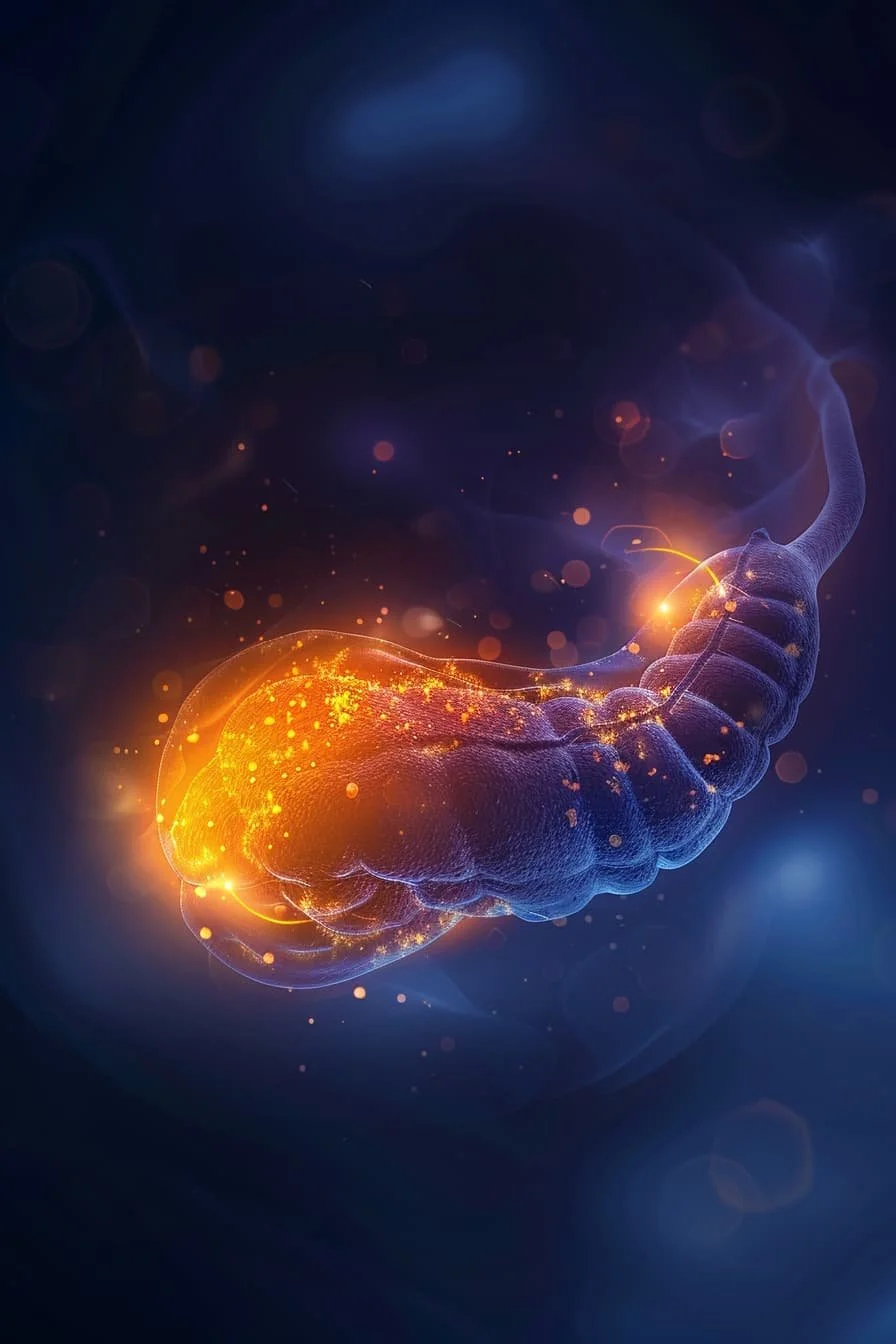
A clear explanation of pancreatitis, why the pancreas becomes inflamed, and how emergency doctors diagnose and treat it.
A Moment in the ER
David, a 44 year old restaurant manager, sits forward on the stretcher with his elbows pressed into his knees. The pain started suddenly a few hours after dinner and now burns deep in the upper part of his stomach. He tells me it feels like the pain shoots straight through to his back. He has already vomited three times before arriving.
When I press gently on his abdomen, he tightens and winces.
Some patterns in medicine appear again and again. This one often points toward a very specific organ.
The Pancreas: A Small Organ Doing Important Work
The pancreas quietly helps your body digest nearly every meal you eat.
This organ sits deep in the upper abdomen behind the stomach and surrounded by other organs like the liver, spleen, and gallbladder. Its main job is to release digestive enzymes that help break down food once it leaves the stomach.
One of the most important enzymes is called lipase. Lipase helps digest fats so the body can absorb them properly. Under normal circumstances these enzymes travel into the small intestine before they activate. In pancreatitis, the pancreas becomes inflamed and those powerful digestive enzymes begin irritating the pancreas itself.
Why the Pain Travels to the Back
Pancreatitis often produces a very recognizable pattern of pain.
Patients usually describe severe pain in the upper abdomen that seems to radiate directly into the back. This happens because the pancreas sits deep in the abdomen close to nerves that transmit pain signals toward the spine.
Experienced emergency physicians often notice this pattern early. When someone presents with intense upper abdominal pain that radiates to the back along with nausea and vomiting, pancreatitis quickly becomes one of the diagnoses we consider while evaluating other dangerous causes of abdominal pain.
The Two Most Common Causes
In the United States, most cases of pancreatitis occur for two main reasons.
The first is heavy alcohol use. Alcohol can irritate the pancreas and trigger inflammation. Over time repeated exposure can damage pancreatic cells and lead to recurrent episodes of pancreatitis.
The second common cause is gallstones. The gallbladder and pancreas share a drainage pathway that carries digestive fluids into the small intestine. When a gallstone blocks that pathway, digestive enzymes can back up and inflame the pancreas. In these cases removing the gallbladder often prevents future attacks.
How Doctors Diagnose and Treat Pancreatitis
Diagnosis usually begins with the story and a blood test.
Blood tests measure pancreatic enzymes, especially lipase. When lipase levels rise along with the classic symptoms, the diagnosis becomes much clearer. Imaging studies such as ultrasound or CT scans may also help confirm inflammation or rule out other causes of severe abdominal pain.
Treatment focuses on helping the pancreas recover. Patients often receive intravenous fluids because dehydration is common. Pain medication and medicines for nausea help control symptoms. Doctors may temporarily stop food and drink so the pancreas can rest, then slowly restart eating as the inflammation improves.
When Pancreatitis Becomes More Serious
Most patients recover with supportive care, but complications can occur.
Severe inflammation can damage pancreatic tissue. In some cases parts of the pancreas lose blood supply and begin to die, a condition called necrotizing pancreatitis. These patients require close monitoring and sometimes antibiotics or specialized care.
Another possible complication is a pancreatic pseudocyst. This is a fluid pocket that forms around the pancreas after inflammation. Many resolve on their own, but larger ones may require drainage by specialists using minimally invasive procedures.
THE BOTTOM LINE
• Pancreatitis is inflammation of the pancreas that usually causes severe upper abdominal pain that radiates to the back
• The most common causes are alcohol use and gallstones, though medications and other conditions can sometimes trigger it
• Treatment usually includes intravenous fluids, pain control, nausea medication, and giving the pancreas time to rest while doctors monitor for complications
By Dr. Karim Ali. Emergency Physician