EKG The Electrical Map

Reading the Heart’s Electrical Story
When Seconds Matter
Chest pain. Sudden collapse. A heart racing or skipping.
Within minutes we place stickers on the chest and press a button. Why so fast? Because when the heart is in trouble, the electricity changes first.
An EKG, also called an ECG, does not show blocked arteries. It does not show blood flow. It shows the electrical signal that tells the heart when to squeeze. In emergency medicine, that signal often reveals danger before any other test.
What Does an EKG Actually Measure?
The heart runs on electricity. Tiny shifts in sodium, potassium, and calcium create currents inside heart cells. Those currents move in a precise sequence. That sequence makes the chambers contract in sync.
A standard emergency EKG is called a 12 lead test. Ten stickers create twelve electrical views. Think of it like twelve camera angles on the same event. If one region struggles, the leads facing that region often show it.
This is physics translated into waves.
What Are We Looking For on the Tracing?
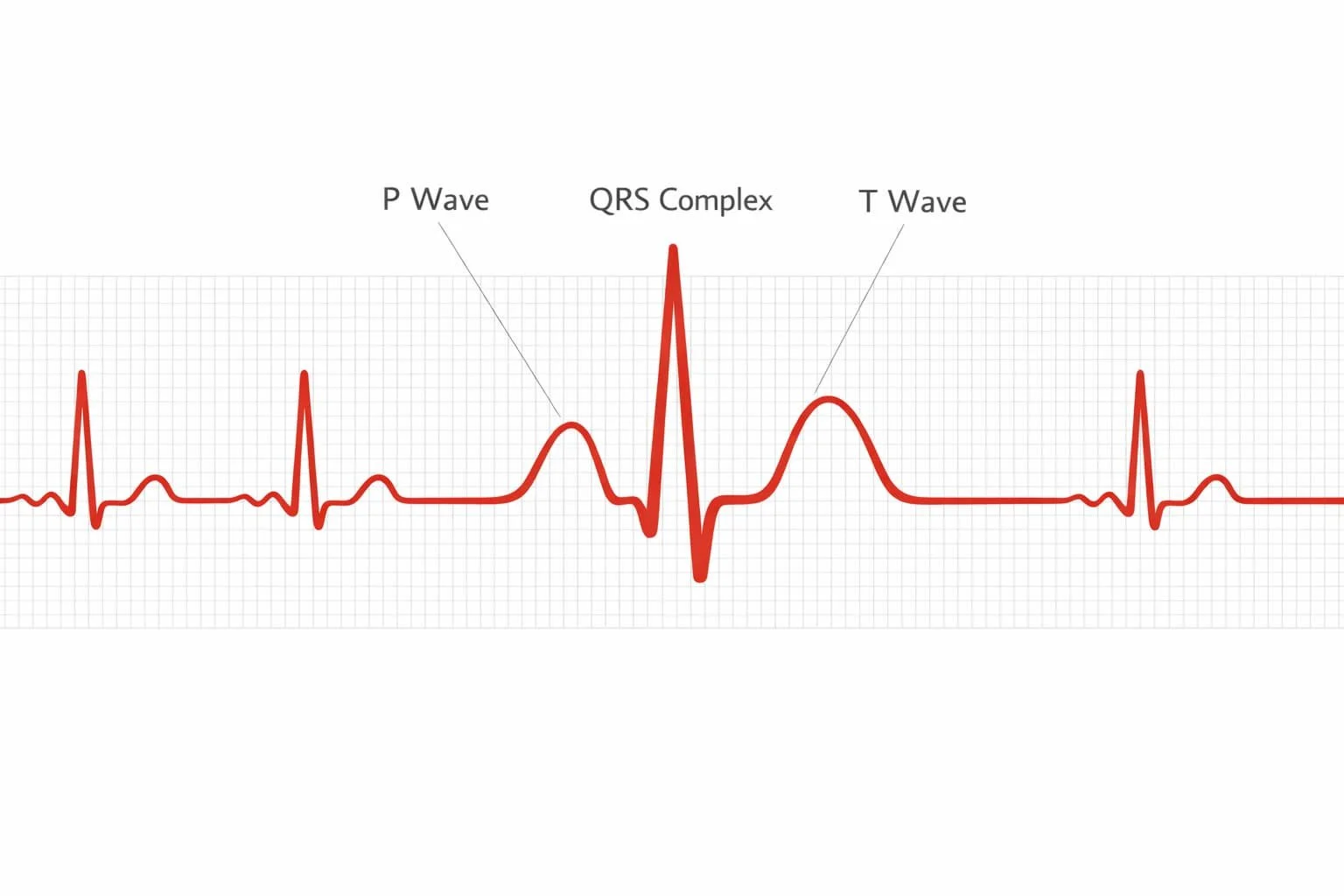
Each heartbeat creates a pattern labeled P, Q, R, S, and T. Each letter marks a different phase of electrical activation.
But reading an EKG is not about memorizing letters. It is about asking structured questions.
How fast is the heart beating?
Is the rhythm regular or chaotic?
Are impulses traveling normally between chambers?
Is the overall direction of current appropriate?
Are there signs of acute injury?
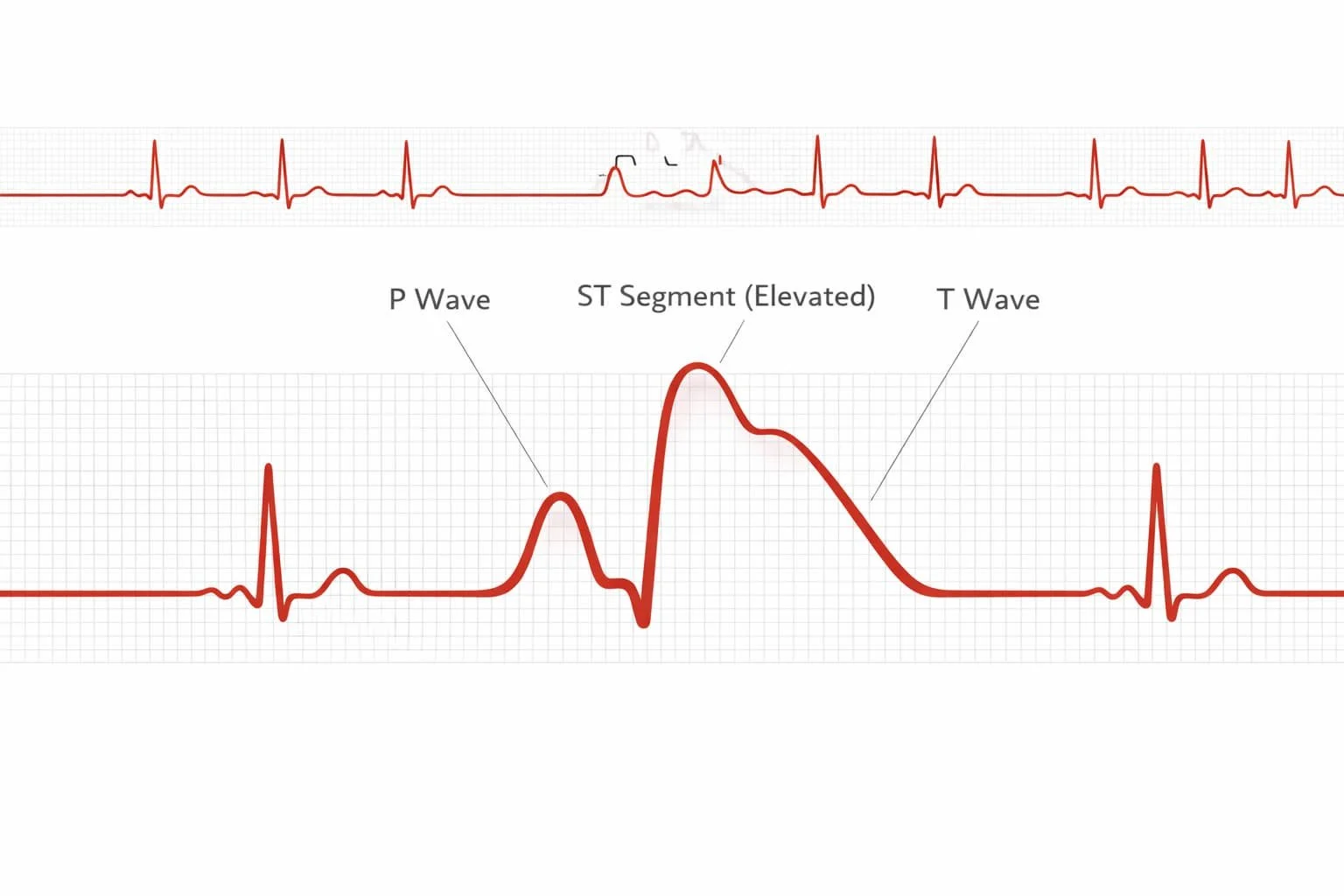
In a patient with chest pain, we focus on the ST segment.
ST elevation can signal an acute heart attack that demands immediate action. ST depression or T wave inversion may suggest reduced blood flow without full muscle damage. Some dangerous conditions cause only subtle shifts.
That is why EKG reading is not memorization. It is pattern recognition paired with clinical judgment.
Can an EKG Diagnose a Heart Attack?
Sometimes, yes. A specific pattern called STEMI (ST elevation myocardial infarction) signals that a portion of the heart muscle is losing blood flow right now. That pattern can trigger an immediate trip to the cardiac catheterization lab.
But not all heart attacks show dramatic changes. Some appear subtle. Some appear normal early on. That is why we combine the EKG with blood tests such as troponin and with the overall clinical picture. The EKG can diagnose certain heart attacks in minutes. It cannot rule them all out by itself.
What Else Can It Detect?
An EKG does far more than diagnose heart attacks. It can identify atrial fibrillation, a common irregular rhythm that increases stroke risk. It can detect dangerous ventricular rhythms that require urgent treatment. It can reveal heart block, where electrical signals fail to travel properly.
Electrolyte disturbances, especially high potassium, can dramatically alter the tracing. Certain medications can lengthen electrical intervals and increase the risk of dangerous arrhythmias. One tracing. Many clues.
Why Does QRS Width Matter?
The heart has four chambers. Two on top. Two on the bottom.
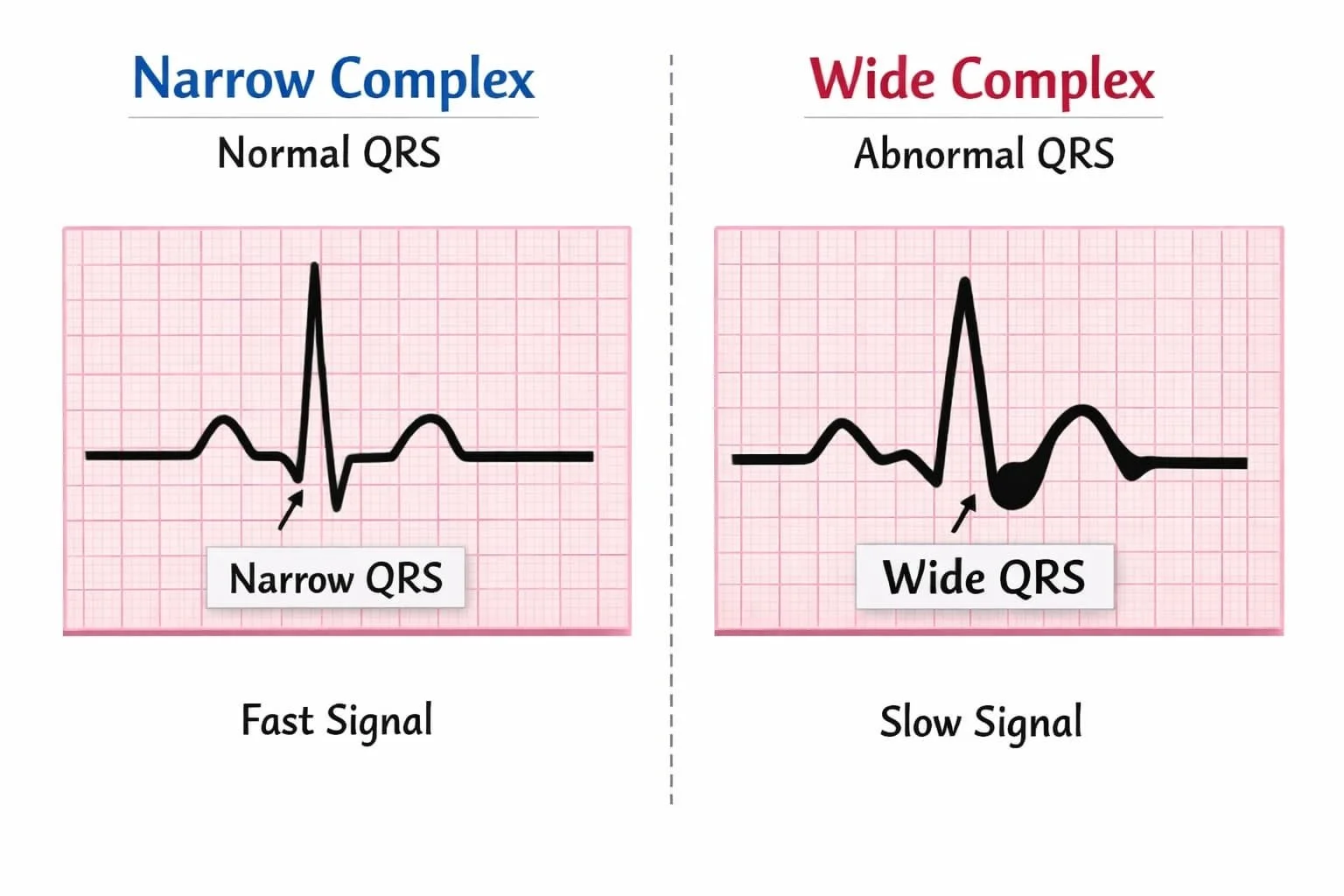
When the electrical signal travels the normal path, the spike on the EKG, called the QRS complex, looks narrow. When the signal starts in the wrong place, usually in the lower chambers, it spreads more slowly. The QRS looks wide. That difference helps us figure out where the rhythm is coming from and how serious it might be.
Some wide rhythms are dangerous and need urgent treatment. Some narrow rhythms feel scary but are less dangerous. This is not memorizing shapes. It is understanding where the electricity started and how it moved.
What an EKG Cannot Do
An EKG cannot directly visualize blocked arteries. A normal tracing does not guarantee a healthy heart. It does not replace imaging or blood tests. It is one powerful piece of a larger evaluation.The value lies not only in obtaining the tracing, but in interpreting it correctly.
Ask the ER Doctor
-
An EKG shows the electrical activity of the heart, including heart rate, rhythm, and signs of injury.
-
Yes. Certain EKG patterns can signal an acute heart attack that requires immediate treatment.
-
A normal EKG is helpful but does not completely rule out heart disease. It must be interpreted alongside symptoms and other tests.
THE BOTTOM LINE
• An EKG records the heart’s electrical activity from multiple angles
• It helps diagnose heart attacks, rhythm disorders, and electrolyte problems
• It is fast and powerful, but always interpreted in clinical context
By Dr. Karim Ali, Emergency Physician