When Sudden Chest Pain Is a Collapsed Lung
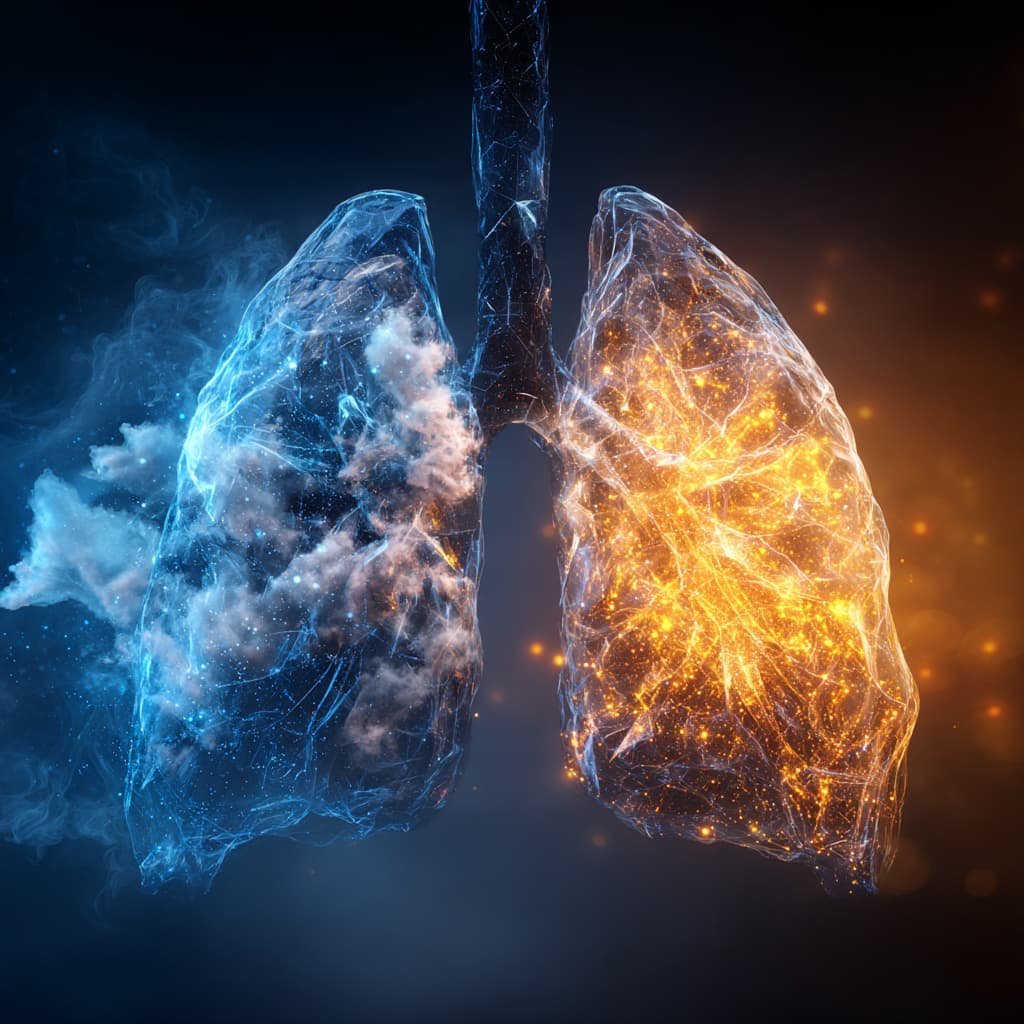
Understanding Pneumothorax and Why Air in the Wrong Place Changes Everything
It Starts With a Sharp Pain
Jason is 23. Tall. Thin. Smokes more than he probably admits. He has been coughing for weeks. Nothing dramatic. Just the persistent smoker’s cough that feels annoying but manageable.
Then one afternoon, sharp pain hits the right side of his chest. It is sudden. It worsens when he tries to take a deep breath. He feels short of breath doing things that were easy an hour ago. He wonders if it is pneumonia. Maybe a heart problem. He is young, but anxiety does not check age. What he has is a pneumothorax.
What Is a Pneumothorax?
Pneumothorax literally means air in the thorax. More specifically, it means air in the pleural space, the thin space between the lung and the chest wall. The lungs are wrapped in a delicate membrane called the pleura. Normally, that space contains only a tiny amount of lubricating fluid that allows the lungs to glide smoothly as you breathe.
Air belongs inside the lung’s air sacs, not outside of them. If a small rupture forms in the lung tissue, air can leak into the pleural space. Once air enters that space, it breaks the negative pressure system that keeps the lung expanded. The lung partially or fully collapses because it can no longer inflate properly.
Why Does That Small Leak Matter So Much?
The lungs expand because of negative pressure, meaning the chest cavity creates a gentle vacuum effect with each breath. When air enters the pleural space, that vacuum seal is broken. Think of a suction cup. Once air slips underneath it, the seal fails.
Even a modest amount of air can prevent full expansion of the lung. Oxygen exchange becomes less efficient. Breathing feels restricted. Patients often describe it as not being able to get a satisfying breath. Early on, oxygen levels may still look reasonable, which can make the situation deceptively calm. But the discomfort is real.
Who Is at Risk?
Spontaneous pneumothorax most commonly occurs in tall, thin young men, especially smokers. Small weak areas on the lung surface called blebs can rupture unexpectedly. Chronic obstructive pulmonary disease, or COPD, increases risk because lung tissue becomes damaged and fragile over time.
Trauma is another major cause. A broken rib can puncture the lung. A stab wound or car accident can allow air to enter directly. In traumatic cases, blood may also accumulate in the pleural space, called a hemothorax. When both air and blood are present, it is known as a hemopneumothorax.
When Does It Become Life Threatening?
Some pneumothoraces are small and stable. These may be managed with observation and supplemental oxygen. Over time, the body can slowly reabsorb the trapped air.
But if air continues to accumulate and cannot escape, pressure builds. This is called a tension pneumothorax. In this condition, rising pressure compresses not only the affected lung but can shift the heart and major blood vessels. Blood return to the heart decreases. Blood pressure drops. This is a true emergency that requires immediate decompression, often with a needle followed by placement of a chest tube.
How Is It Treated?
Treatment depends on severity. Small pneumothoraces may only require monitoring and repeat imaging. Larger or symptomatic cases often require a chest tube, a flexible plastic tube inserted into the pleural space to remove air and allow the lung to re-expand.
For patients with recurrent pneumothorax, a procedure called pleurodesis may be performed. During pleurodesis, a substance such as sterile talc is introduced into the pleural space to cause controlled inflammation. This encourages the lung lining to adhere to the chest wall, reducing the chance of future air leaks. It is not elegant, but it is effective.
THE BOTTOM LINE
• Pneumothorax occurs when air escapes the lung and enters the pleural space, causing partial or complete lung collapse
• It often presents as sudden sharp chest pain and shortness of breath, especially in young smokers or after trauma
• Tension pneumothorax is life threatening and requires immediate treatment to relieve pressure in the chest
By Dr. Karim Ali, Emergency Physician