proBNP When the Heart Is Under Pressure
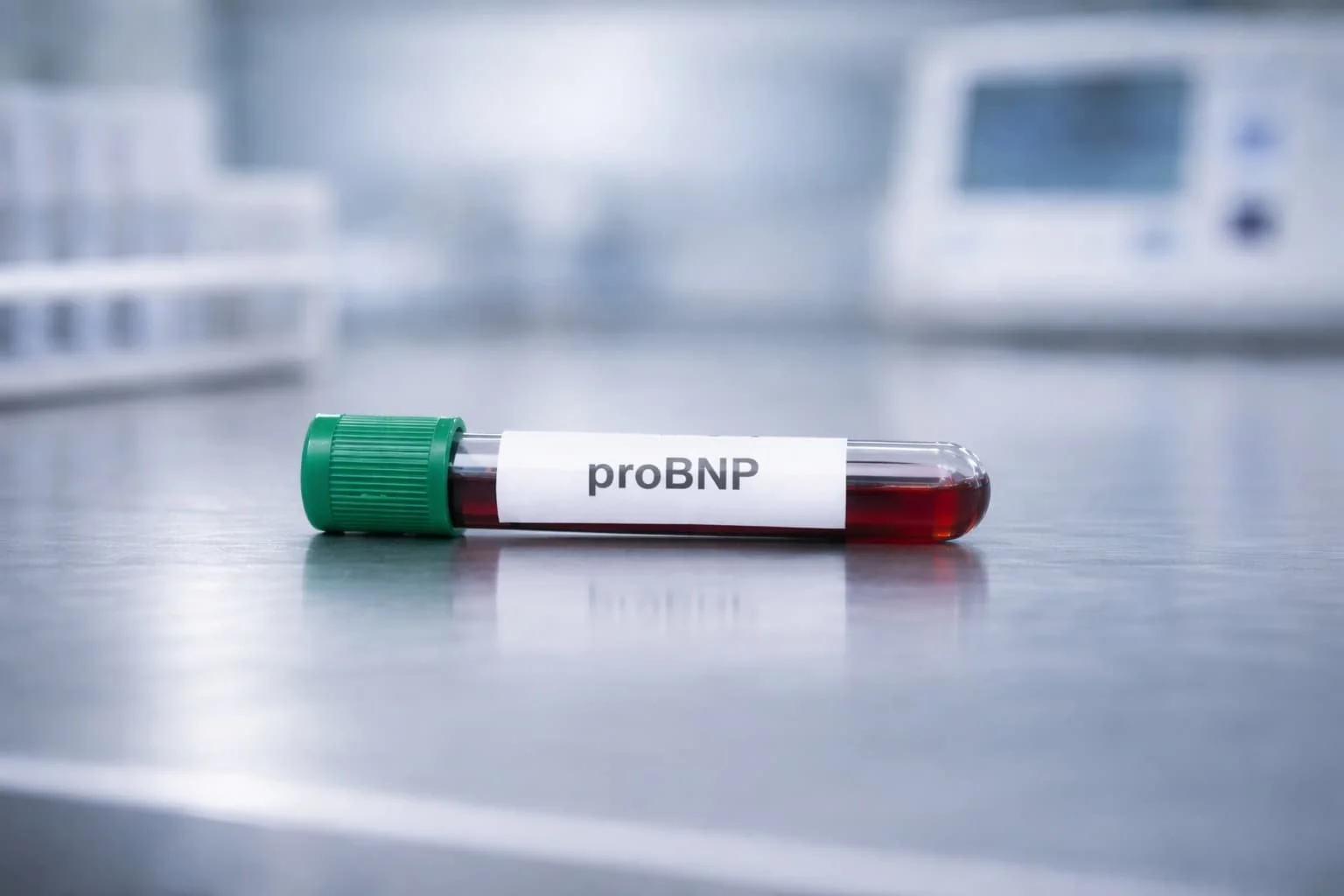
A blood test that helps us rule out congestive heart failure
The Moment It Helps
Shortness of breath. Swelling in the legs. Sudden weight gain. Waking up at night gasping for air. Sometimes the question is simple but urgent. Is the heart struggling?
That is where proBNP can help. proBNP is a blood test we use most often when we are concerned about heart failure. It does not show us the heart directly. It does not replace imaging. But it gives us a biochemical signal that the heart may be under stress. It is one piece of the puzzle. And in the right setting, it is a very useful one.
What proBNP Actually Measures
When the heart muscle is stretched from pressure or fluid overload, it releases certain hormones. One of them is BNP. proBNP is the measurable precursor form we detect in the blood. In simple terms, when the heart is working harder than it should, this number often rises.
Heart failure is the most common reason. When the heart is not pumping efficiently, fluid can back up into the lungs or collect in the legs. That increased pressure stretches the heart muscle. The muscle responds by releasing more proBNP. Higher levels can suggest that fluid overload or heart strain is present. But context matters.
What We Look For in the ER
If someone comes in short of breath, proBNP helps us sort through possibilities. Is this pneumonia? A blood clot in the lung (pulmonary embolism)? Anxiety? Or fluid backing up from heart failure? An elevated proBNP supports the diagnosis of heart failure, especially when paired with exam findings and imaging.
However, not every high number means heart failure. Other conditions can raise it. A large pulmonary embolism can strain the right side of the heart. A severe heart attack can injure heart muscle. Kidney disease can reduce clearance of proBNP, causing levels to run higher at baseline. Older age alone can raise levels modestly.
On the other side, obesity can falsely lower proBNP. A patient can have active heart failure with a level that appears lower than expected. This is why we rarely look at the number in isolation. We look at trends. We look at symptoms. We look at the whole patient.
Why Trends Can Matter More Than a Single Number
Some patients with chronic (long standing) heart failure have persistently elevated proBNP levels. For them, a single reading may not tell the full story. But if the number is rising compared to their baseline, that can signal worsening strain. If it is falling after treatment, that may reassure us that therapy is working.
The direction can matter more than the absolute value. Medicine is often about patterns, not snapshots.
What proBNP Cannot Do
proBNP does not show us blocked arteries. It does not measure pumping strength directly. It does not replace an echocardiogram. It is a signal. Not a diagnosis by itself. We interpret it alongside imaging, vital signs, physical exam, and clinical judgment.
THE BOTTOM LINE
• proBNP tells us whether the heart is feeling pressure
• It helps clarify why someone is short of breath
• It is powerful when paired with the full clinical picture
By Dr. Karim Ali, Emergency Physician