X Ray The First Look
A Quick Look Inside
Why Do We Still Use X-Ray?
You have seen it before. The glowing bones on a hospital drama. The film clipped to a lightboard. It feels old school. In some ways, it is.
But in emergency medicine, old school does not mean outdated. It means reliable. X-ray remains one of the most useful and frequently ordered imaging tools we have because it is fast, portable, and efficient. Sometimes simple answers are the most important ones.
What Is an X-Ray Actually Showing?
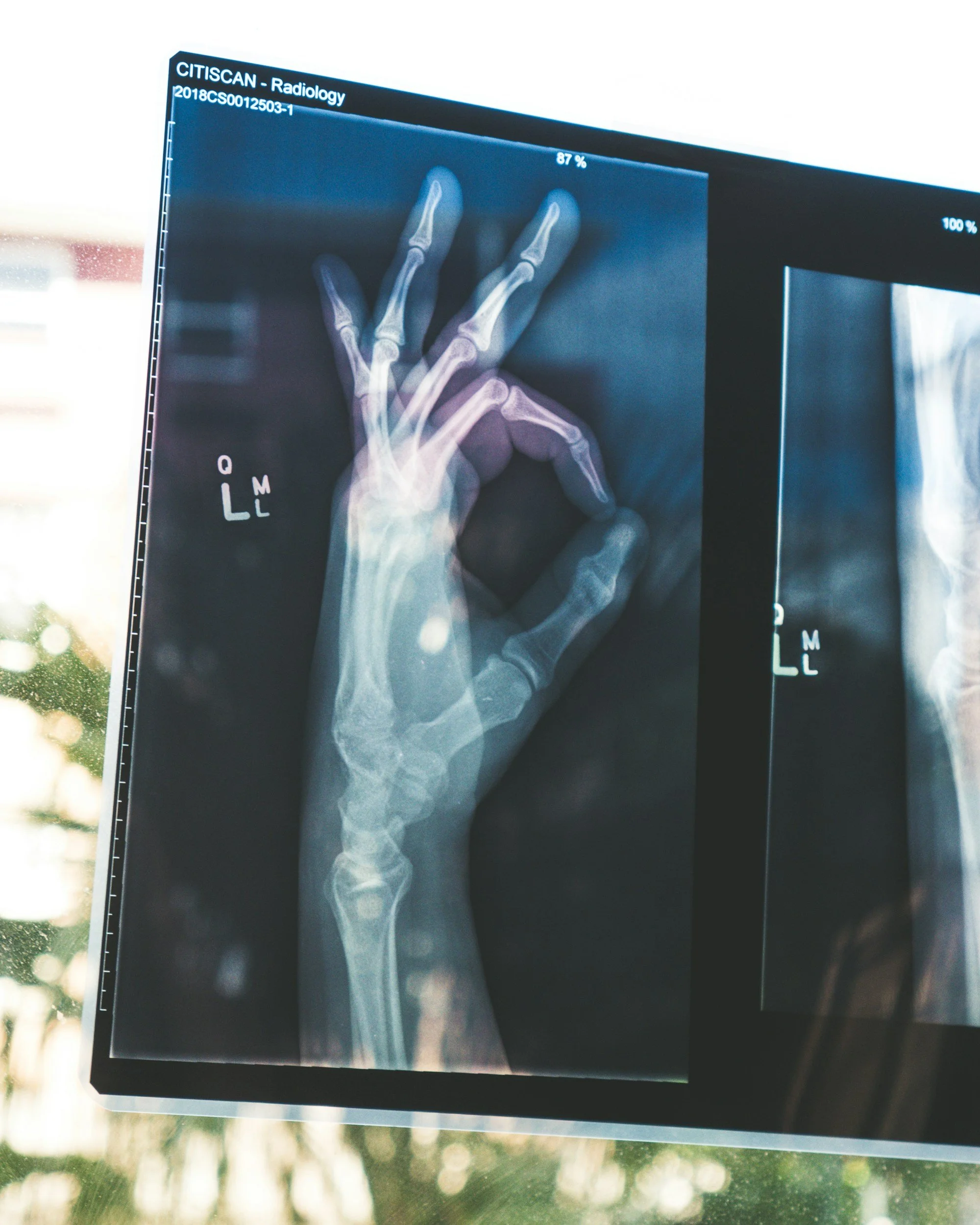
An X-ray uses a small amount of radiation to create a two-dimensional image. Dense structures like bone absorb more radiation and appear white. Air appears black. Soft tissues fall somewhere in between.
It is not layered like a CT. It is not detailed like an MRI. It is essentially a shadow picture. But when you understand what shadows represent, they can reveal a great deal. Sometimes a shadow is all we need.
What Are We Looking For?
X-ray shines in specific situations. It is particularly strong for bones and lungs. If someone falls and cannot move their wrist, an X-ray quickly shows whether a fracture or dislocation is present. In the chest, it helps detect pneumonia, a collapsed lung, fluid around the lungs, and changes in heart size. It also confirms whether tubes and lines placed in emergencies are in the correct position.
In the abdomen, it may show signs of bowel obstruction or certain calcified kidney stones. It is often the first step before deciding whether more advanced imaging is necessary.
What Are Its Strengths and Limits?
The strengths are practical. X-ray is quick. It uses relatively low radiation compared to CT. It can be brought directly to the bedside. In trauma situations, that portability matters.
The limits are equally important. It is two-dimensional. It can miss subtle fractures, early infections, and many internal organ problems. If we need more detail, we escalate to CT or another modality. X-ray is often the screening tool, not the final chapter.
When Do We Decide Not to Order One?
Not every injury requires imaging. If the exam is reassuring, movement is normal, and the risk of serious injury is low, we may choose not to order an X-ray at all.
More pictures do not always mean better care. The goal is not to image everything. The goal is to image what changes management. Good medicine is selective.
THE BOTTOM LINE
• It quickly detects fractures, lung problems, and line placement
• It uses relatively low radiation and can be performed at the bedside
• It is often the first step, not the final answer
Written by a Board-Certified Emergency Medicine Physician