What Does "Stable" Mean in the Hospital?
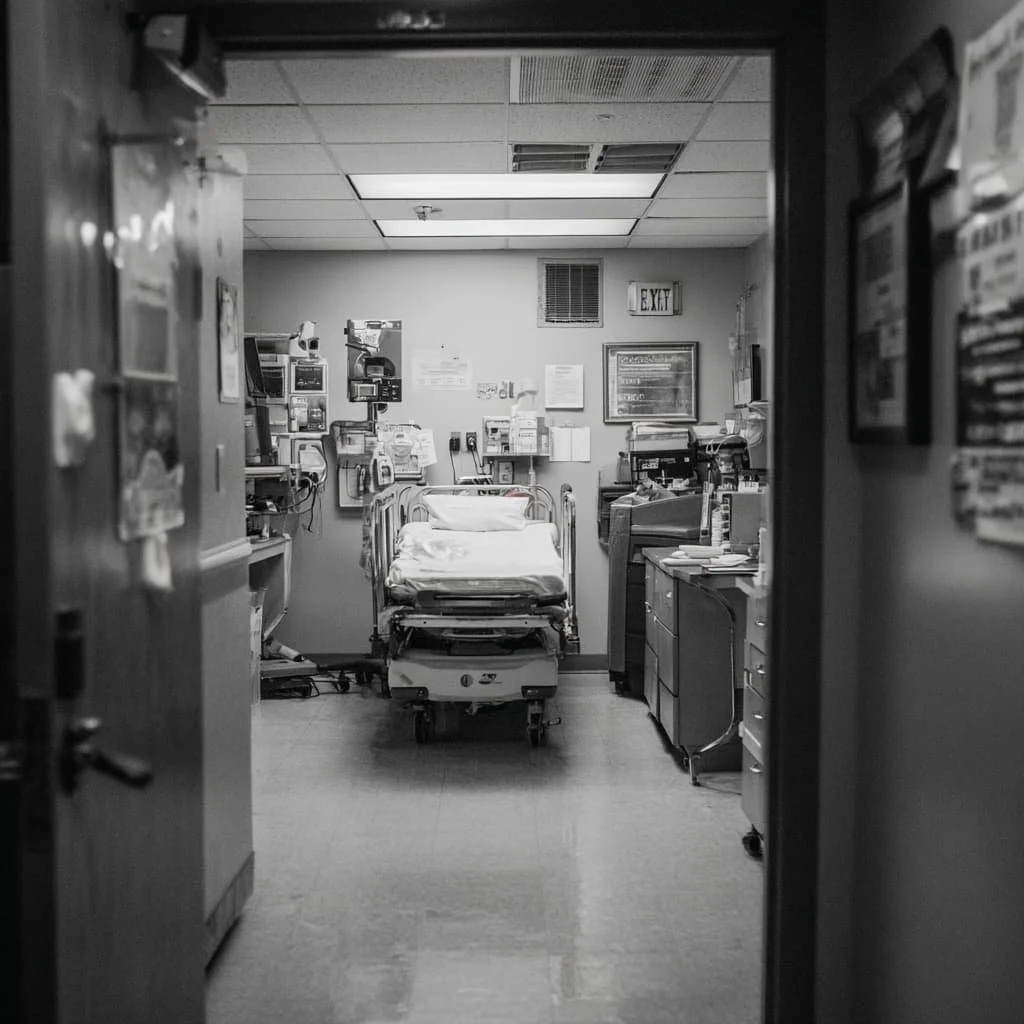
The word families hold onto and what it actually tells you about a patient's condition.
Stable is one of the most misunderstood words in medicine.
The room is quiet except for the steady beep of a monitor. A daughter named Renata, who has waited three hours without taking off her coat, finally catches the doctor in the hallway. She asks the question almost everyone asks.
"Is he stable?"
The doctor nods. Her shoulders drop an inch. For a moment, she thinks the worst is over.
But the word did not promise what she heard. Most people hear stable and think everything is okay now. In medicine, stable does not mean cured. It does not always mean safe. It often means only one thing: the patient is not getting worse right now.
Stability Is About Direction, Not Distance
Doctors are watching the trend, not the snapshot.
When we call someone stable, we are usually describing trajectory. Blood pressure is holding. Oxygen is not dropping. The heart rate is not racing upward. Nothing is spiraling in front of us. That steadiness is what earns the word, and it says nothing about how sick the person actually is.
This is why a very ill patient can still be stable. Someone with advanced cancer may have a scan full of abnormal findings, but if those findings match last month's images, we call the scan stable. A patient in kidney failure can have alarming lab numbers that are stable simply because they look like yesterday's. Experienced ER doctors think in patterns of change. A dangerous trend worries us far more than a single ugly number.
Stable Is Not the Same as Fine
This is where almost all the confusion lives.
A stable patient may still need surgery. They may still need the ICU. They may still be in real pain or facing a diagnosis that will change their life. Stability does not erase any of that. It means there is enough control in the moment to think clearly, finish the workup, and plan the next step. It is often the first goal, not the finish line.
Picture a man having a major heart attack. Medication and oxygen can make him stable within the hour. The heart attack still happened. A trauma patient can become stable after a transfusion while serious internal injuries remain. Stability buys time. It does not undo the disease underneath.
A person can be abnormal but stable. A person can be very sick but stable. A person can look comfortable in the morning and become unstable by afternoon.
The Hospital Words Are Looser Than You Think
Condition terms are far less precise than people assume.
You will hear critical, serious, guarded, fair, and stable in hospital hallways and news reports. These are not strict scientific grades, and different hospitals use them a little differently. In rough terms, critical means unstable with life-threatening problems happening right now. Serious usually means still dangerous but more controlled. Stable means the vital signs are not actively deteriorating.
None of these words tell the whole story alone. Two patients can both be called stable while living completely different realities. One is getting dressed to go home that afternoon. The other is in the ICU with machines supporting failing organs. The word describes only the current moment. It makes no promise about the next one.
Why ER Doctors Reach for This Word So Often
Emergency medicine runs on triage, not on cures.
Our first job is rarely to fix everything at once. It is to sort the room. Who is actively dying. Who might become unstable next. Who has time for a careful evaluation. When a patient finally becomes stable, the urgency softens. Imaging gets reviewed more carefully. Consultants get called. Families finally get a fuller conversation instead of a rushed update.
In many ways, stable describes the pace of the room as much as the patient in the bed. The word does not just report a condition. It tells the team it has earned a moment to think. That shift is real, and it is part of why we reach for the word so often.
Stable Can Change in Minutes
The word describes now, and now does not last.
A patient who looks settled at two in the afternoon can turn at four. Bleeding that was slow can speed up. An infection that seemed contained can spread. A heart rhythm that was holding can slip. This is why reassessment never stops in the ER. We recheck the same patient again and again, not because we expect trouble, but because stable is a reading we have to keep taking.
This is also why a doctor may sound careful even while saying things are stable. We are describing a snapshot, never a guarantee. So the most useful question a family can ask is not simply "Is she stable?"
Better questions are: "Stable compared to when?" "What are you still worried about?" "What would tell you things are getting worse?" Those questions almost always lead to clearer answers.
THE BOTTOM LINE
• Stable usually means a patient is not rapidly worsening right now. It does not mean healthy, cured, or out of danger.
• A person can be seriously ill, need the ICU, or face major risks and still be medically stable at the same time.
• Stable is a snapshot of this moment, not a prediction of the next one. The sharpest question is always: "Stable compared to when?"
When someone is critical, the team is working to find which system is failing, and the person who knows their history best is often the one who cannot speak. The Emergency File keeps their medications, conditions, and history in one place, ready for the moment no one plans for. Get The Emergency File. Free 13-page PDF. Fill it once. Keep it where someone can find it.
Ask the ER Doctor
-
It is generally reassuring, but it is not the same as safe. Stable means the patient is not rapidly getting worse right now. It does not tell you how sick they are, whether they need surgery or the ICU, or what will happen next. A stable patient can still be seriously ill.
-
Not necessarily. Stable describes steadiness, not improvement. The patient is holding their position rather than sliding backward. Getting better is a separate trend, and a doctor would usually say "improving" if that were the case.
-
Yes, and this happens often. Stable and serious describe two different things. Serious speaks to how dangerous the underlying condition is. Stable speaks to whether the vital signs are steady in the moment. A person can be both at the same time.
By Dr. Karim Ali, Emergency Physician