Why Does a Blood Clot Form in the Leg? Understanding DVT
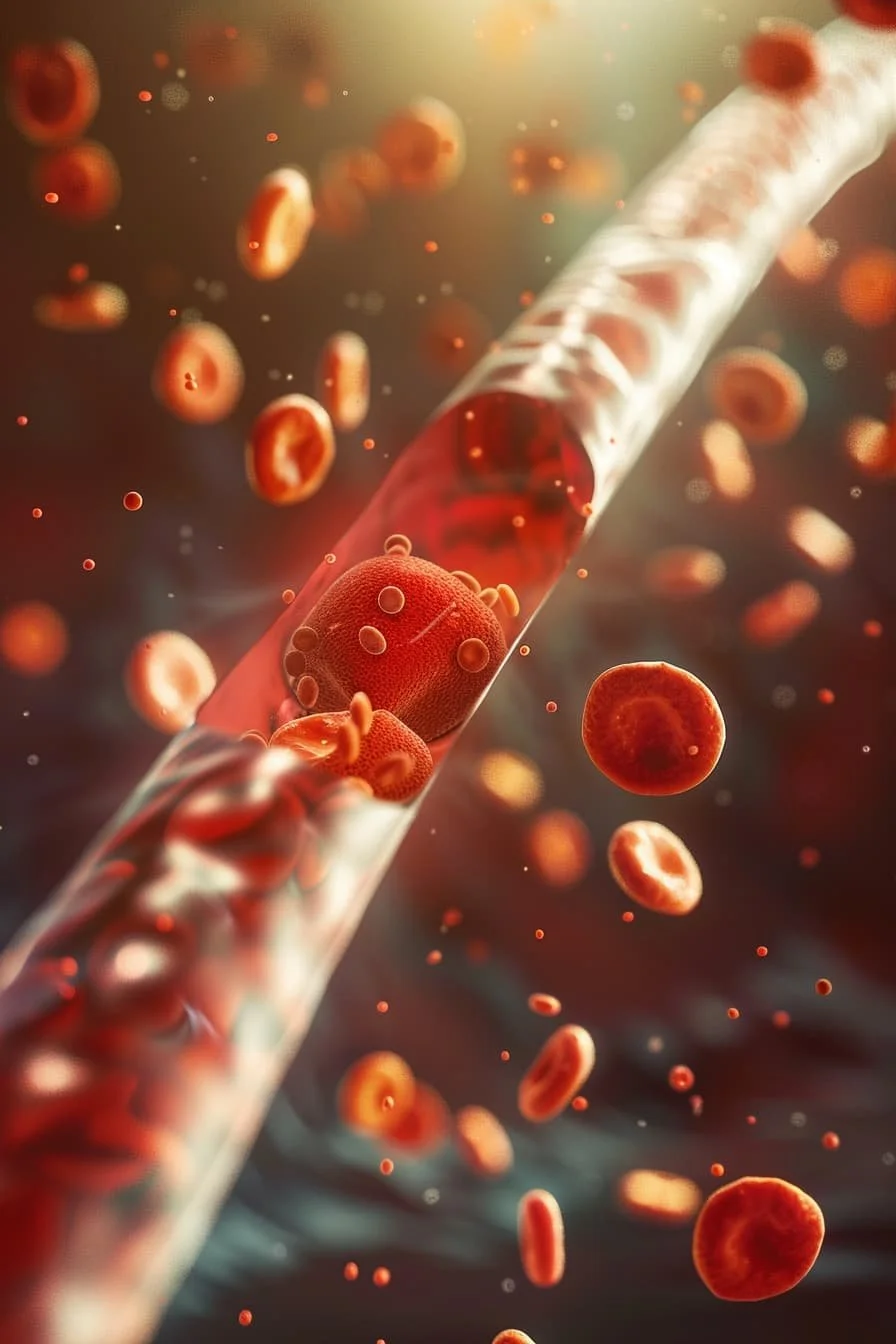
Understanding why blood clots form in the deep veins of the leg and how doctors diagnose and treat deep vein thrombosis
When Leg Pain Returns Unexpectedly
Laura drove home from Colorado after a long hiking trip. A few weeks earlier she had twisted her ankle on the trail, but the bruising and soreness had mostly faded.
Now her left calf feels different.
The leg looks swollen and warm to the touch. The pain is deeper than before and seems to worsen when she walks. Something about the pattern raises concern.
What a Deep Vein Thrombosis Actually Is
A deep vein thrombosis, or DVT, is a blood clot that forms in one of the deep veins of the body.
Most commonly these clots occur in the large veins of the legs. Veins normally carry blood back toward the heart after oxygen has been delivered to tissues.
When blood flow slows or the vein becomes injured, blood can begin to clot inside the vessel. Instead of flowing smoothly, a thick clot forms that partially blocks the vein.
Why Blood Clots Form
Doctors often think about three major conditions that increase the risk of clot formation.
First is slowed blood flow. Long periods of immobility such as long car rides, flights, or bed rest can allow blood to pool in the legs. When blood sits still, it is more likely to clot.
Second is injury to the blood vessel itself. Trauma, surgery, or fractures can irritate the vein lining and trigger clot formation. Third is increased clotting tendency in the body, sometimes called hypercoagulability. This may occur in pregnancy, cancer, inherited clotting disorders, or with certain medications such as estrogen therapy.
The Symptoms Doctors Watch For
DVT often causes swelling and discomfort in one leg.
Patients may notice pain in the calf or thigh, warmth in the affected area, and visible swelling compared to the other leg. The skin may appear slightly red or tight.
One important detail is that circulation to the foot often remains normal. Pulses are usually present and the foot still has normal color. That helps doctors distinguish a venous clot from an arterial blockage, which affects blood flow in a different way.
Why Doctors Take DVT Seriously
The biggest concern with a DVT is that part of the clot can break loose.
If a clot travels through the bloodstream and reaches the lungs, it becomes a pulmonary embolism. This can block blood flow in the lungs and cause chest pain, shortness of breath, or even life threatening complications.
Because of this risk, doctors move quickly to confirm the diagnosis and begin treatment.
How DVT Is Diagnosed and Treated
The most common test used to diagnose DVT is an ultrasound of the leg.
Ultrasound allows doctors to visualize the veins and see whether blood flow is blocked by a clot. If a clot is present, treatment usually begins with anticoagulation, often called blood thinners.
These medications prevent the clot from growing and reduce the risk of new clots forming. Many patients take blood thinners for several months while the body gradually breaks down the clot. In more severe cases, specialized procedures may be needed to remove the clot directly.
THE BOTTOM LINE
• A deep vein thrombosis is a blood clot that forms in the deep veins, most commonly in the legs
• Symptoms often include swelling, warmth, and pain in one leg
• Blood thinners are the main treatment and help prevent the clot from traveling to the lungs and causing a pulmonary embolism
By Dr. Karim Ali, Emergency Physician