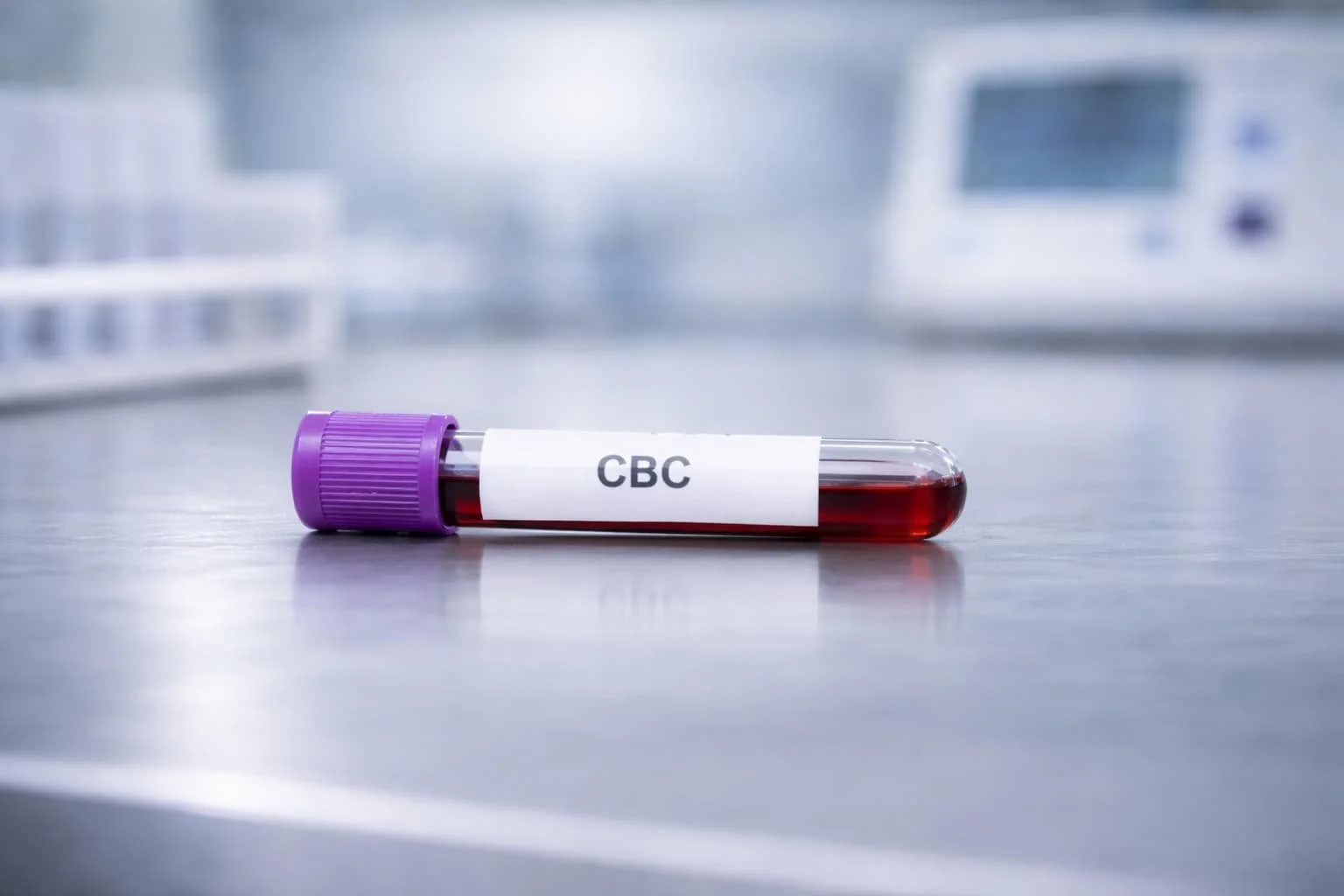
CBC A Look at Your Cells
The Snapshot of Your Blood
The Test We Order All the Time
If you spend even a few hours in an emergency department, you will hear it. “Let’s get a CBC.” It is one of the most common blood tests we order, not because it is dramatic, but because it is foundational. A complete blood count gives us a fast overview of what is happening in your bloodstream.
It does not diagnose everything. But it often tells us where to look next. Think of it as a headcount. Who is present, how many, and is anything unusually high or low?
What It Actually Measures
A CBC focuses on three major components: white blood cells, red blood cells, and platelets. White blood cells reflect immune activity. When elevated, they can signal infection (such as pneumonia) or inflammation. When low, they may suggest immune suppression, viral illness, medication effects, or bone marrow problems.
Red blood cells, specifically the hemoglobin, tell us about oxygen-carrying capacity. If hemoglobin is low, that is anemia. Platelets help with clotting. Too few increases bleeding risk. Very high levels can reflect inflammation or certain blood disorders. Three cell lines. Three clues.
What We Are Thinking in the ER
When I review a CBC, I am not memorizing numbers. I am asking structured questions. Is there infection? Is there bleeding? Is the bone marrow under stress? The CBC helps frame the problem, but it rarely solves it by itself.
A high white count does not automatically mean bacterial infection. Stress, trauma, and even medications can elevate it. A low hemoglobin does not automatically mean active bleeding. Context matters. The CBC is a direction sign, not a verdict.
A Memorable Way to Think About It
If your bloodstream were a city, the CBC tells us how many security guards are on duty, how many delivery trucks are carrying oxygen, and how many repair crews are ready to stop a leak.
It does not tell us who caused the problem. But it tells us whether the city is prepared to respond. That perspective alone can change how we approach the next decision.
What It Cannot Do
A CBC does not tell us where blood loss is coming from. It does not identify the exact cause of infection. It does not diagnose cancer on its own. It is a screening tool, not a final diagnosis.
Sometimes it reassures us. Sometimes it pushes us toward imaging or further testing. Sometimes it surprises us. But it always gives us structure in the middle of uncertainty.
Ask the ER Doctor
-
A CBC measures white blood cells, red blood cells, and platelets to look for infection, anemia, inflammation, or bleeding problems.
-
A high white blood cell count can suggest infection or inflammation, but results must be interpreted in context.
-
Low hemoglobin usually indicates anemia, which can result from bleeding, chronic disease, or nutritional deficiency.
THE BOTTOM LINE
• CBC shows infection, anemia, and clotting risk at a glance.
• It provides structure when symptoms are unclear.
• It guides next steps, but it is rarely the final answer.
By Dr. Karim Ali, Emergency Physician