Could This Be Diverticulitis? Left Lower Abdominal Pain Explained
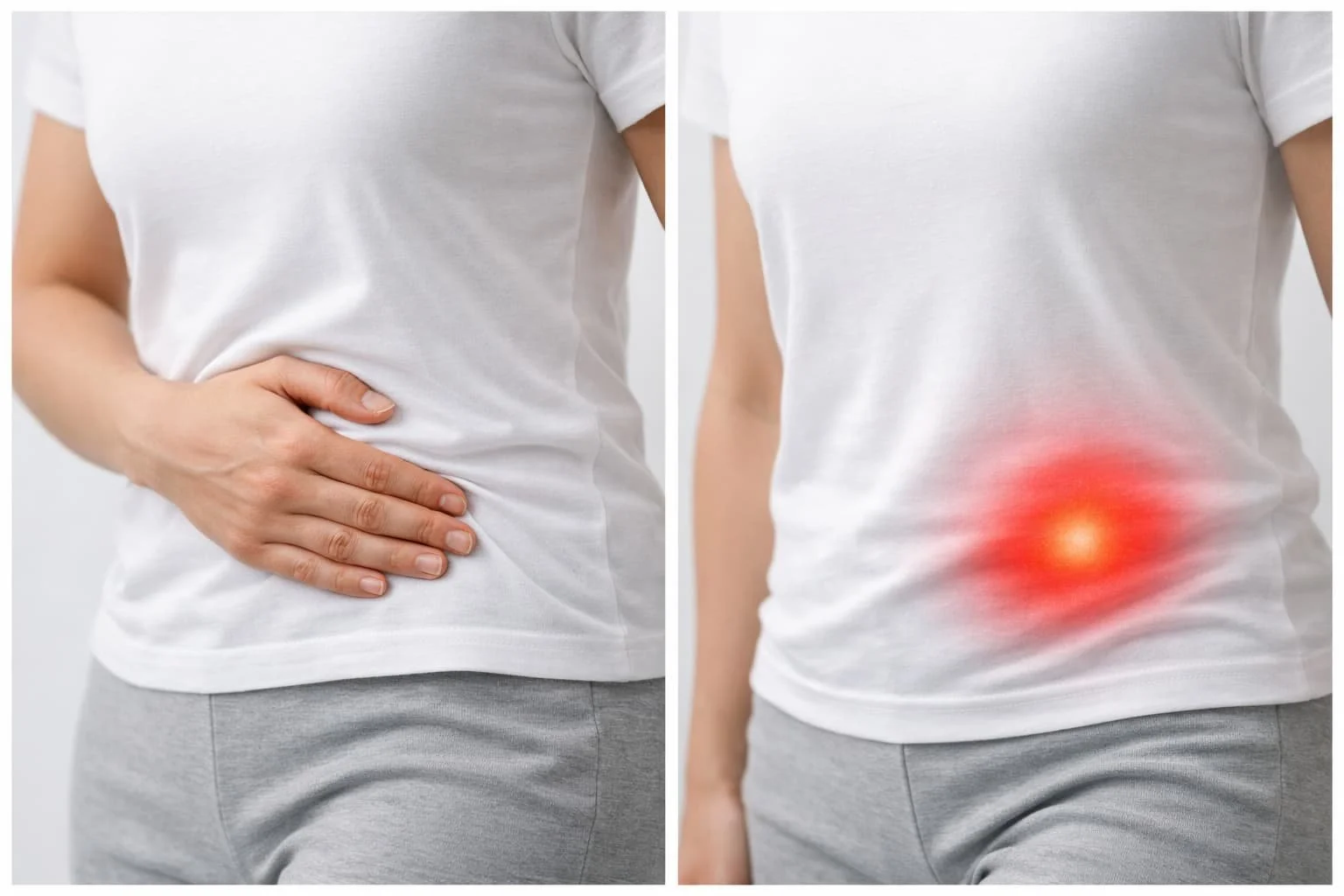
What diverticulosis means, how diverticulitis happens, and when left lower abdominal pain becomes more serious.
When Constipation Is Not the Whole Story
A 45-year-old man thought he was just “backed up”. He had been feeling constipated for a few days, a little nauseated, and sore in the left lower part of his abdomen. At first it seemed manageable. Then the pain became more focused, more constant, and harder to ignore.
By the time he came to the ER, even small movements made it worse. That pattern matters.
Because when abdominal pain becomes localized and the body starts to look inflamed, emergency doctors start thinking about more than “just constipation.”
Diverticulosis vs Diverticulitis
Many patients search diverticulosis vs diverticulitis, but the difference is simple.
Diverticulosis means there are small pouches in the wall of the colon called diverticula. These are common, especially with age, and many people have them without ever knowing it.
Diverticulitis happens when one or more of those pouches becomes inflamed or infected. That is when the pain starts. Diverticulosis is the setup. Diverticulitis is when it becomes a real medical problem.
What Causes Diverticulitis
Understanding what causes diverticulitis starts with what usually comes first: diverticulosis.
Over time, a low-fiber diet may contribute to increased pressure inside the colon. That pressure can weaken certain areas of the colon wall and allow those small pockets to form.
Not everyone with diverticulosis will develop diverticulitis. But once those pockets exist, one of them can become irritated, inflamed, or infected. That is when patients begin to feel it.
This used to be thought of mostly as a disease of older adults. But with modern diets and lower fiber intake, doctors are seeing diverticulitis in younger patients more often than before.
What Diverticulitis Usually Feels Like
The classic symptom is left lower abdominal pain.
It often starts as a dull ache but becomes more localized and persistent. Many patients also feel bloated, constipated, nauseated, or generally unwell. Some develop fever or chills. Others mainly notice that the pain keeps getting worse instead of fading.
That is why diverticulitis symptoms can be easy to dismiss at first. Many patients assume they are constipated, ate something bad, or pulled a muscle. But on exam, the left lower abdomen is often clearly tender.
That tenderness matters. In emergency medicine, abdominal pain is taken more seriously when it is not just reported but clearly reproducible on exam.
How Doctors Diagnose Diverticulitis
Diverticulitis diagnosis is not based on symptoms alone. A lot of things can cause left lower abdominal pain, including constipation, kidney stones, kidney infection, ovarian problems, bowel inflammation, or muscular pain. That is why ER doctors have to think broadly at first.
The workup usually starts with the story, the physical exam, and blood work. Many patients with diverticulitis have an elevated white blood cell count, which suggests inflammation or infection. Some are also a bit dehydrated because they have not been eating or drinking well.
In many adults, the test that often confirms the diagnosis is a CT scan. A diverticulitis CT scan can show inflammation in the colon, irritation in the surrounding tissues, a microperforation (a tiny leak or small hole), an abscess (a pocket of infected fluid), or more severe complications.
That is often what helps doctors tell whether the case is relatively straightforward or something more serious.
When It Becomes More Serious
Not all diverticulitis is the same. Some cases are uncomplicated, meaning there is inflammation but no abscess, no rupture or perforation (a break or hole in the bowel wall), no widespread infection, and no major structural problem. Other cases are complicated.
That can mean:
perforation or rupture, where the inflamed area breaks open
abscess, a pocket of infected fluid or pus
bowel obstruction, where the intestines become blocked and things stop moving through normally
worsening infection
or signs the patient is becoming systemically ill, meaning the body as a whole is starting to look affected, not just the abdomen
That distinction changes everything. A patient with mild uncomplicated diverticulitis may be treated outside the hospital. A patient with a microperforation, abscess, or unstable vital signs may need admission, IV antibiotics, drainage, or surgery depending on the situation.
This is why doctors care so much about what the scan actually shows, not just whether the pain is “probably diverticulitis.”
How Treatment Has Changed
This is one of the most important things patients do not realize. For years, almost everyone with diverticulitis got antibiotics automatically. That used to be standard.
But diverticulitis treatment has evolved. In mild uncomplicated diverticulitis, antibiotics are no longer always required. In carefully selected patients, the body can often heal with time, fluids, pain control, rest, and close follow-up.
That is a major shift in how doctors think about the condition. That said, diverticulitis antibiotics still absolutely matter in the right situation. Patients who are sicker, vomiting, immunocompromised, systemically ill, or showing signs of perforation or abscess often still need antibiotics and sometimes hospital-level care.
So the question is not just: “Is this diverticulitis?”
It is also: “How bad is it?”
Does Diet Matter?
Patients ask about diverticulitis diet all the time, and that is a reasonable question.
During a flare, people often tolerate a simpler, easier-to-digest diet better while the inflammation settles down. Long term, doctors often encourage more fiber in the diet to support colon health and reduce pressure in the colon over time. Diet is not the whole story but it is definitely part of the bigger picture.
And for many patients, this is the diagnosis that finally forces them to pay attention to how their gut has been functioning for a long time.
What Can Look Like Diverticulitis
Not every case of left lower abdominal pain is diverticulitis. Kidney stones can do it. Kidney infections can do it. Ovarian torsion or ovarian cysts can do it. Muscular pain can do it. Other bowel conditions can do it too.
That is why emergency doctors do not just look for one diagnosis. They are also trying not to miss something else important. In emergency medicine, the diagnosis is rarely just about where the pain is. It is about what pattern the whole picture creates.
When the Pattern Starts to Look More Concerning
Not every episode of abdominal discomfort turns out to be something serious.
But doctors pay closer attention when the pain is:
getting worse instead of better
clearly localized, especially in the left lower abdomen
associated with fever or chills
paired with nausea, vomiting, or trouble keeping fluids down
accompanied by significant tenderness when the belly is touched
occurring alongside weakness, dehydration, or a more systemically ill appearance
Those are the kinds of features that make the picture feel less like simple constipation and more like something inflammatory or infectious.
THE BOTTOM LINE
• Diverticulosis means pockets in the colon. Diverticulitis means one of those pockets has become inflamed or infected
• The diagnosis usually comes from the story, the physical exam, blood work, and often a CT scan
• Mild cases may improve with supportive care alone, but more severe cases can require antibiotics, admission, drainage, or surgery
Ask the ER Doctor
-
Diverticulosis means there are small pouches in the wall of the colon. Diverticulitis means one or more of those pouches has become inflamed or infected.
-
Sometimes, yes. Mild uncomplicated diverticulitis can often improve with rest, fluids, pain control, and time. More severe or complicated cases still often need antibiotics.
-
During a flare, doctors often recommend a simpler, easier-to-digest diet until symptoms improve. Longer term, a higher-fiber diet is often encouraged to support colon health and reduce future problems.
-
Mild cases often begin improving over a few days, though full recovery can take longer. Persistent or worsening pain, fever, or inability to eat or drink usually means the situation needs a second look.
-
Surgery is usually reserved for complications such as rupture (when the inflamed area breaks open), abscess, bowel obstruction, recurrent severe episodes, or failure to improve with treatment.
By Dr. Karim Ali, Emergency Physician